

What Is In Vape Juice and How Is It Made?
Posted by Courtney McElligott on Jul 28th 2026
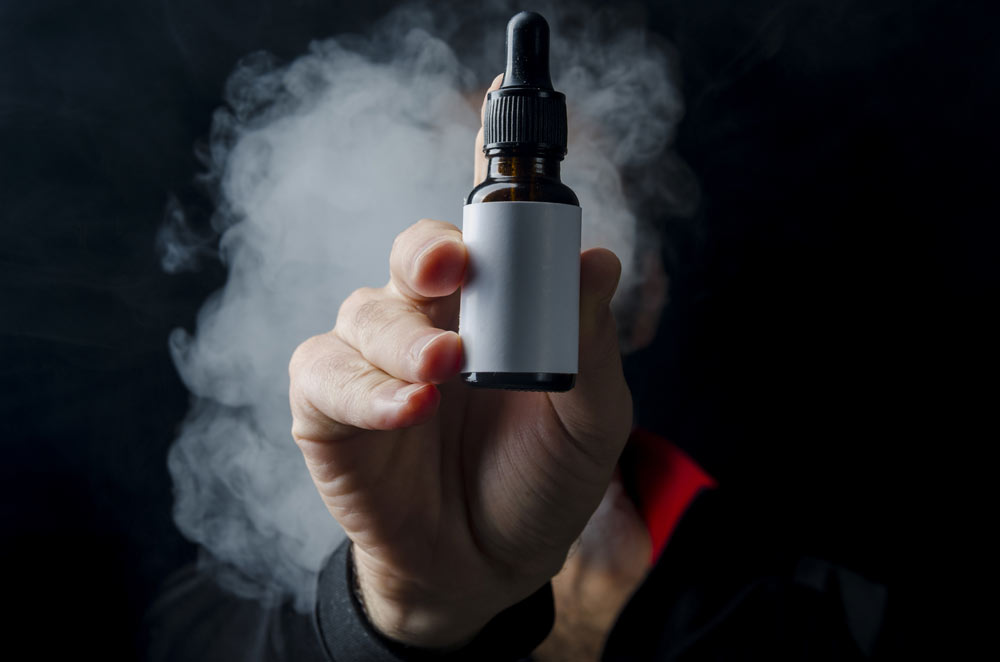
New to vaping, or just curious what that liquid is your friends keep refilling? Here's a plain-language rundown of what vape juice is, what goes into it, how the label choices change the experience, and how a bottle gets made.
What Is E-Juice?
Vape juice is the liquid that goes inside a vaporizer or e-cigarette. The device heats it until it turns to vapor, which is what you inhale and exhale. Nothing burns. The coil simply warms the liquid past its boiling point.
E-juice comes with or without nicotine, and it can be flavorless or flavored. Those are the first two choices you'll make as a vaper, and both are pure preference.
What Is in Vape Juice?
Four things: vegetable glycerin, propylene glycol, food-grade flavoring, and optional nicotine. The two bases together usually account for 80 to 90 percent of the bottle, and flavoring plus nicotine make up the rest.
Vegetable Glycerin (VG)
VG is the reason a vape puts out a dense cloud instead of a thin wisp. It's thick, colorless, odorless, and faintly sweet, and it does most of the work of producing visible vapor. More VG in the blend means bigger, smoother clouds.
It's a common food ingredient outside vaping. Because it's so thick, though, it doesn't wick well on its own in a tank, which is where the second base earns its place.
Propylene Glycol (PG)
Mixing propylene glycol into VG thins the liquid so it wicks and fires properly in an atomizer. PG also carries flavor better than VG, so it's what makes the flavor notes pop. It's near-odorless with a slight sweetness, milder than VG.
As a food additive, PG is recognized by the FDA as GRAS (generally recognized as safe) for use in food. That's a statement about food use, not a claim about vapor products.
Vape Flavorings
The PG/VG base has very little taste on its own, so flavor is added. Not every food flavoring belongs in e-liquid. Some ingredients are perfectly fine to eat but were never formulated to be inhaled, so established makers use concentrates selected and tested for vaping.
The practical takeaway: buy juice from an established manufacturer, and don't grab baking extracts off a grocery shelf assuming they translate.
Nicotine
Nicotine is the optional one. You pick a strength in milligrams per milliliter (mg/mL), and you decide whether you want any at all. Plenty of vapers run 0 mg and vape purely for flavor and vapor.
Nicotine is an addictive chemical, and concentrated nicotine needs careful handling.
Reading the PG/VG Ratio
Almost every bottle prints a ratio, usually as two percentages. Higher PG gives a firmer throat hit, sharper flavor, and a thinner cloud. Higher VG gives a smoother draw and a much denser one. A 50/50 blend sits in the middle and is the most forgiving pick for a first device. If you want the full breakdown, we cover PG and VG ratios in detail.
One note on comfort: a small number of vapers find higher-PG juice irritating on the throat. If a PG-forward bottle burns or leaves your throat raw, switch to a high-VG or max-VG blend and see whether it settles.
Picking a Nicotine Strength
Strength runs from 0 mg up through the higher numbers, and the right one depends mostly on your device. Small pods and mouth-to-lung kits vaporize very little liquid per puff, so they pair with higher strengths. Sub-ohm tanks vaporize far more per puff, which is why cloud-focused vapers stay at 3 mg or 6 mg.
Format matters too. Freebase and nicotine-salt formulas feel different at the same milligram number, so a strength that suits one won't necessarily suit the other. Start at the lower end for your device type and move up only if the juice feels thin.
Cost and Quality
You tend to get what you pay for, and that goes for hardware as much as juice. A solid device costs more up front and gets replaced less often.
E-liquid works the same way. A specialty shop stocks juice from makers who control their flavor sourcing and mixing far more carefully than whatever ends up on a gas-station rack. Most of them will also tell you what's in the bottle and where it was mixed.
Storing an Open Bottle
Heat, light, and air are what age e-liquid. Keep bottles capped, upright, and out of a hot car or a sunny windowsill, and check the label for a best-by date. A bottle stored properly holds its flavor for months; one left open on a desk in July will taste dull in weeks. There's more on making a bottle last if you buy in larger sizes.

Making Your Own Juice
Before you start mixing, decide how strong you want the nicotine, or whether you want any. The math is simple: strength in mg/mL multiplied by volume in mL gives you total nicotine in mg. To skip the arithmetic, use our e-juice recipe calculator.
Adding Nicotine
Wear gloves for this step. Concentrated nicotine is toxic and absorbs through skin, so treat it with respect. Draw up slightly more than your target with a blunt-tip syringe, watch the measurement marks, and dispense slowly into a properly sized plastic dripper bottle.
Choose Your Flavors
With the nicotine in, add flavoring. Any combination you like, as long as every flavor is one intended for vaping. Around 10 percent of the total mix is a sensible starting point. You can always add more; you can't take it back out.
Add the Base
This is your VG and PG. A 50/50 split is a balanced place to start, then tune from there: more VG for clouds, more PG for throat hit and flavor. A mixing calculator gets you the exact amount of each to hit your target ratio and strength.
Cap and Shake
Cap it tight and shake hard for a few minutes, until the mix looks uniform rather than streaky.
Let It Steep
Many recipes taste better after they sit. Letting a fresh mix rest for a few days gives the flavors time to blend and mellow, and it matters most with layered multi-flavor builds. Our guide to steeping e-juice covers the methods worth bothering with.
Putting It All Together
Four ingredients, a few label choices, and a bit of patience. That's the whole picture. Once you can read a bottle, the catalog stops being a wall of names and starts being a set of decisions you're making on purpose.
Ready to skip the mixing? Browse our e-juice flavors, from tobacco blends to fruit, dessert, and bakery profiles.
Frequently Asked Questions
What are the four main ingredients in vape juice?
Vegetable glycerin (VG), propylene glycol (PG), food-grade flavoring, and optional nicotine. VG and PG together usually make up about 80 to 90 percent of the bottle, with flavoring and nicotine accounting for the rest.
What is the difference between PG and VG?
PG is thinner, carries flavor sharply, and gives a firmer throat hit with a smaller cloud. VG is thicker, mildly sweet, and produces the dense vapor. The ratio printed on the bottle tells you which way that juice leans.
Can vape juice be nicotine-free?
Yes. Many flavors are sold at 0 mg for vapers who want flavor and vapor without nicotine. Nicotine is an optional ingredient, and you pick the strength when you buy or mix.
What is the difference between freebase nicotine and nic salts?
Both are nicotine measured in mg/mL. Nic salts add an acid, often benzoic, that makes higher strengths feel smoother, which suits small pod devices. Freebase gives a sharper throat hit and is common at lower strengths in higher-power tanks. A 20 mg salt and a 20 mg freebase hold the same nicotine but feel different on the inhale.
How long does a bottle of e-liquid last once it's open?
That depends on how much you vape and how much power your device pulls, so it varies widely. For shelf life rather than usage: keep the bottle capped and away from heat and light, and check the label for a best-by date.
Is mixing your own e-juice worth it?
DIY lets you set your own flavor blend, PG/VG ratio, and nicotine strength, and the cost per bottle drops once you've bought the supplies. It does mean handling concentrated nicotine carefully, measuring accurately, and waiting out a steep. If that's not appealing, pre-mixed bottles already cover every ratio and strength.
These products are intended only for adults 21+. Nicotine is an addictive chemical. This article is general product information and is not a smoking-cessation claim.