
How to Choose Nicotine Strength for Vaping
Posted by Cameron Harris on Apr 3rd 2025
Choosing the Best Nicotine Strength E-Juice: A Complete Guide
Choosing the right nicotine strength is key to a satisfying vaping experience. This guide helps you pick the best strength based on your smoking habits, device type, and personal needs.
After reading this guide, you’ll be able to:
- Understand why nicotine strength is crucial for a satisfying vaping experience and aids in transitioning from smoking.
- Read nicotine labels in mg/mL and know how your smoking habits, vaping style, and device type influence the right choice.
- Know what strength to start with and how to adjust gradually to prevent withdrawal symptoms.
Understanding Nicotine Strengths in E-Juice
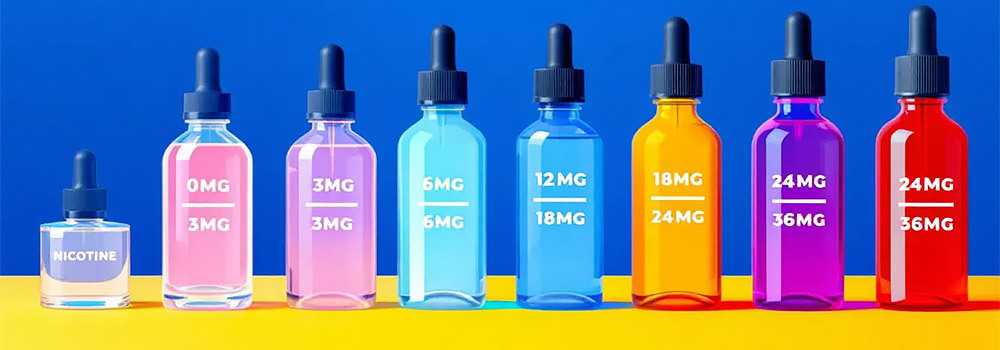
Choosing the right nicotine level in your e-liquid is essential for a satisfying vaping experience. The correct strength helps you transition smoothly from smoking to vaping, reducing cravings and withdrawal symptoms. With countless brands, flavors, and nicotine levels available, knowing the differences between strength levels makes the decision much easier.
High nicotine levels can cause dizziness and headaches for novice vapers, so starting in the right range matters. Factors that influence your ideal level include how many cigarettes you smoked, your smoking style, lung capacity, e-liquid nicotine concentration, and your vaping style.
What Is Nicotine?
Nicotine is a chemical compound found naturally in the tobacco plant — and also in trace amounts in common vegetables like potatoes, eggplant, and tomatoes. It affects users by elevating mood, increasing alertness, and inducing a sense of calmness. In e-liquids, nicotine plays a key role in satisfying cravings, making it an essential component for those transitioning from smoking.
Nicotine Salts vs. Freebase Nicotine
Nicotine salts are created by adding acid to freebase nicotine to balance the pH, resulting in a gentler throat hit. This allows users to enjoy higher nicotine strengths without the harshness associated with regular nicotine — a 6 mg freebase e-liquid feels roughly equivalent to 20–25 mg nicotine salts in terms of throat hit.
Common nicotine strengths for nic salt e-liquids include 3 mg, 6 mg, 25 mg, and 50–60 mg. Understanding the differences between salts and freebase helps you choose the option that best suits your preferences.
How Nicotine Strength Is Measured
Nicotine strengths are shown on e-liquid bottles in mg/mL (milligrams of nicotine per milliliter of liquid). They’re also sometimes expressed as a percentage. Common strengths include 0 mg, 3 mg, 6 mg, 12 mg, and 20 mg. The lowest available dose is typically 3 mg (0.3%), while nicotine salts can go up to 50–60 mg (5–6%).
Choosing the Right Strength Based on Smoking Habits
Your previous smoking habits are the single strongest predictor of where to start. Beginning with lower nicotine levels and incrementally increasing can ease the transition and minimize withdrawal symptoms.
| Smoker Type | Cigarettes/Day | Recommended Strength |
|---|---|---|
| Light | Fewer than 10 | 3–6 mg/mL |
| Medium | 10–20 | 6–12 mg/mL |
| Heavy | More than 20 | 12–20 mg/mL |
Light Smokers
Light smokers typically benefit from nicotine strengths around 3–6 mg/mL. For social smokers who vape occasionally, 3–5 mg (0.3–0.5%) is recommended. Lower concentrations lead to a smoother experience and reduce the risk of overconsumption. Vapers using sub-ohm devices often choose very low strengths to enhance flavor without heavy nicotine intake.
Medium Smokers
Medium smokers should aim for 6–12 mg/mL for optimal satisfaction. For average smokers, 10–12 mg/mL is a good starting point. Experimenting within this range helps identify the most satisfying level.
Heavy Smokers
Heavy smokers typically need higher nicotine strengths to manage cravings effectively. Starting at 18–20 mg/mL can help heavy smokers transition smoothly from smoking to vaping. Nicotine salts at these strengths deliver a much smoother throat hit than freebase nicotine at the same level.
Factors Influencing Nicotine Strength Selection
Beyond smoking history, your device type, vaping style, and PG/VG ratio all affect how nicotine strength is perceived. The same mg/mL can feel very different on different setups.
Device Type
MTL (mouth-to-lung) kits typically need higher nicotine concentrations, while sub-ohm kits require lower strengths. Low vapor production devices like pod systems and MTL tanks have tighter airflow, making them ideal for high nicotine strengths including nic salts. High vapor production devices work best with 1.5–6 mg/mL.
Vaping Style
Mouth-to-lung (MTL) vaping mimics a cigarette draw and suits higher nicotine levels. Direct-to-lung (DTL) vaping moves more vapor through the lungs and calls for lower strengths. Restricted direct-to-lung (RDTL) sits between the two. Aligning your nicotine strength with your vaping style leads to a more satisfying experience.
Vapor Production
High vapor production devices require lower nicotine concentrations to prevent overwhelming intake. Choosing the right PG/VG blend also affects vapor production — higher VG ratios produce more vapor and typically pair with lower nicotine levels.
Converting Nicotine Strengths

Nicotine strength is sometimes labeled as a percentage instead of mg/mL. The conversion is simple:
mg/mL → %
Divide by 10
18 mg/mL = 1.8%
% → mg/mL
Multiply by 10
3% = 30 mg/mL
Tips for Adjusting Your Nicotine Strength
Start Low and Adjust Upwards
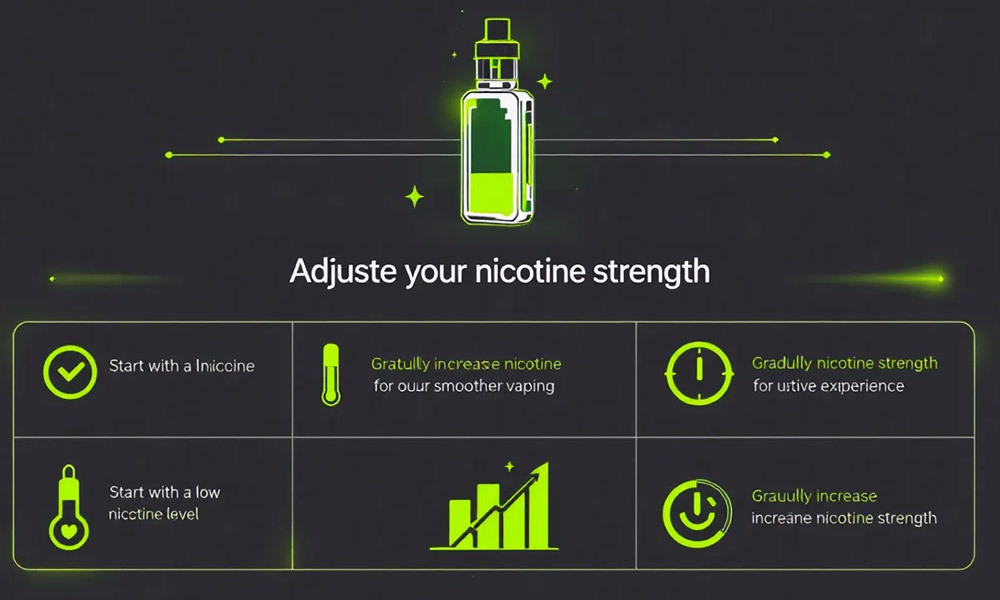
Begin with a lower concentration to reduce the risk of adverse effects, and adjust upwards only if lower levels don’t satisfy your cravings. This gradual approach minimizes the risk of overwhelming side effects like dizziness or headaches.
Monitor Cravings and Side Effects
Track how you feel after vaping. Persistent cravings suggest your nicotine level may be too low. Symptoms like headaches or nausea indicate it may be too high. Use these signals to home in on your ideal strength.
Experiment with Different E-Liquids
Trying various e-liquids — different flavors, PG/VG ratios, and nicotine strengths — significantly enhances your overall experience. Customizing your setup increases the chances of finding a combination you genuinely enjoy. Browse our full range of e-juice flavors and nicotine salt e-liquids to experiment.
In Summary
Selecting the best nicotine strength is influenced by your smoking habits, device type, and vaping style. Understand the difference between nicotine salts and freebase nicotine, start with a conservative strength, and adjust based on cravings and side effects. Armed with this knowledge, you can confidently find a level that makes every puff satisfying.
Frequently Asked Questions
What is the difference between nicotine salts and freebase nicotine?
Nicotine salts are formed by adding acid to freebase nicotine, producing a smoother throat hit that allows for higher nicotine concentrations without harshness. Freebase nicotine delivers a more intense throat hit at the same mg/mL.
How do I know which nicotine strength is right for me?
Match your strength to your smoking history: light smokers start at 3–6 mg/mL, medium smokers at 6–12 mg/mL, and heavy smokers at 12–20 mg/mL. Adjust from there based on satisfaction and side effects.
How do I convert nicotine strength from mg/mL to percentage?
Divide the mg/mL value by 10. For example, 18 mg/mL = 1.8%.
Why should I start with lower nicotine levels when switching to vaping?
Starting low reduces the risk of adverse effects like dizziness and headaches, allowing for a gradual adjustment and a smoother transition from smoking.
How does my vaping device affect the nicotine strength I should use?
MTL devices generally require higher nicotine concentrations because they produce less vapor. Sub-ohm devices move more vapor per puff and are better suited to lower strengths to avoid nicotine overconsumption.